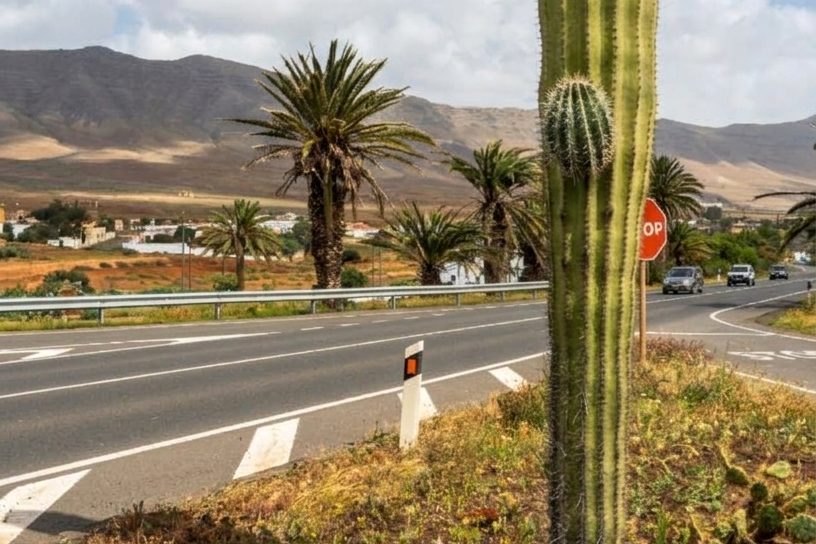
Driving in Aruba feels familiar to US drivers, because traffic keeps to the right and you overtake on the left. The main differences are speed limits in kilometers per hour, many roundabouts, and paid parking in downtown Oranjestad. The Aruba Tourism Authority describes driving on the island as not dangerous.
The rules below come from the tourism authority, Aruparking, the company that runs paid parking in Oranjestad, and the rental companies’ own terms, checked in November 2026. Where to pick up a car and how booking works are covered in our overview of car rental options in Aruba.
What side of the road does Aruba drive on?
The right, as in the US, and you overtake on the left. Traffic in Aruba is right-hand, so driving a rental car in Aruba starts from habits you already have. Road signs show speeds in km/h, and Econo notes that rental car speedometers do too.
The table pulls the driving in Aruba rules a US driver needs into one place. Your US license works for renting at most companies we checked, though Econo asks for an international driver’s license, as our guide to license, age and card rules for renting in Aruba explains.
| Topic | Rule in Aruba | Where it comes from |
|---|---|---|
| Side of the road | Drive on the right, overtake on the left | Aruba Tourism Authority |
| Speed limits | 30 km/h in urban areas (about 19 mph), 60 km/h out of town (about 37 mph), 80 km/h on faster roads (about 50 mph), unless signs say otherwise | Aruba Tourism Authority; mph conversion ours |
| Roundabouts | Cars already on the roundabout have right of way | Aruba Tourism Authority |
| Crossroads without signs | Traffic from the right has right of way | Aruba Tourism Authority |
| Turning left | Oncoming traffic has right of way | Aruba Tourism Authority |
| Red lights | No right turn on red | Econo’s driving notes |
| Parking | No parking along a yellow line, on a bridge or on a road with a continuous middle line | Aruba Tourism Authority |
Treat the posted sign as the final word. Econo’s notes give 50 km/h in urban areas, so limits can differ from street to street, and the sign in front of you is what counts.
How do Aruba roundabouts work?
Wait at the entrance and join when there is a gap, since cars already on the roundabout have right of way. Econo’s driving notes point out that the island has many of them.
The rule that surprises US drivers more is the one at unmarked crossroads. There, traffic from your right has right of way. Picture an invisible yield sign facing you whenever a car approaches from the right, and slow down before every unmarked junction.
Before you sign. Ask the desk for a map or set your phone’s navigation before you leave the lot. The first roundabouts come quickly, and it is easier to follow a route you already know.
How does parking in Aruba work?
Parking in Aruba outside the capital is mostly about where not to park. For parking in Oranjestad, Aruba’s capital, the tourism authority notes that parking meters were introduced, and paid parking run by Aruparking covers the area around Caya Betico Croes, the Main Street, and L.G. Smith Boulevard.
Visitors use the spaces marked with white lines. Yellow-lined spaces are for employees and permit holders only. Aruparking’s own parking FAQ lists these terms in Aruban florins, as of November 2026.
- Rate. AWG 1 per 30 minutes and AWG 2 per hour, up to AWG 20 for 10 hours.
- Paid hours. Monday to Saturday, 9 a.m. to 7 p.m., unless a sign says otherwise. Sundays and public holidays are free.
- Payment. Local or US coins, Visa or Mastercard, or the Pay.aw app on your phone. The meters give no change.
Skipping payment costs far more. A parking fine is AWG 75 for any violation. A car left unpaid 2 hours after the fine can be towed by a tow truck, for AWG 150 plus AWG 25 a day in storage, up to AWG 75. A two-hour lunch on Main Street costs AWG 4, while a fine, a tow and three days of storage add up to AWG 300.
Who pumps the gas in Aruba?
At most stations, an attendant does. At a self-service station you pay first and then pump.
The tourism authority adds that fuel costs the same at every station, because the government regulates gas prices. Current prices per liter are on our page about gas prices in Aruba. Fill up before you return the car, since Top Drive, Amigo and Alamo all charge their own rate for a tank that comes back low.
Is it safe to drive in Aruba?
The Aruba Tourism Authority calls it not dangerous, and most of what feels new is the rules above. A few local conditions are worth knowing.
- Rain. Econo warns that the occasional rainfall can leave an oily, slippery surface, so slow down on wet roads.
- Beaches and dunes. Econo notes that cars and other motor vehicles are strictly prohibited on sand dunes and beaches.
- Dirt roads. Standard passenger cars are not permitted beyond the park checkpoints on the way to the Natural Pool, which is reachable only by 4×4, on foot or on horseback.
- Downtown streets. Many streets in Oranjestad are one-way, according to Econo’s notes.
Econo’s notes add that some sights, mainly along the north coast, can only be reached on rugged dirt roads that do not suit a regular car. Aruba roads in and around Arikok National Park are part of that picture, and whether a jeep is worth it is covered in our guide to when a 4×4 makes sense in Aruba.
What to do after an accident in a rental car
Get a police report. At Top Drive and Amigo, the damage waiver depends on one, and without it the renter can be liable for the whole repair. Even with a report, Amigo’s waiver covers only a collision with another vehicle, and Top Drive’s CDW excludes what it calls “one-way” accidents, speeding and off-road driving.
- Stop and make the scene safe. Switch on the hazard lights and check that everyone is unhurt.
- Call the police and your rental company. Use the number on your rental agreement, and ask the company how it handles the report and the car.
- Get the report. Top Drive voids its CDW without a valid police report, and Amigo’s terms refer to a police or Forensys report.
- Photograph everything. Take pictures of both cars, the road and the other driver’s details before anything is moved, if it is safe to do so.
What each type of cover pays for after a crash, and what it leaves out, is in our guide to rental car insurance in Aruba.
Before you sign. Save the rental company’s phone number in your phone at pick-up, and ask what number to call after an accident. Some waivers stop working without the right paperwork.
Driving in Aruba comes down to a short list of tips for driving in Aruba that fit on a sticky note. Keep right, read the signs in km/h, give way on roundabouts and to traffic from the right, and pay for parking downtown.
We earn a commission if you book through the search below. You do not pay us anything, and no rental company pays to be listed here.